
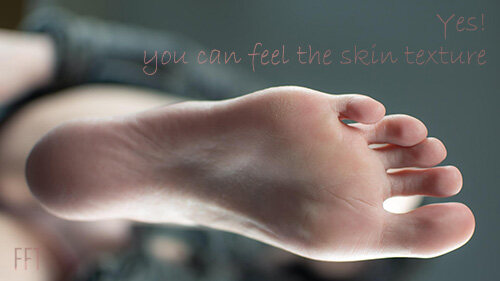
Most people who purchase a realistic silicone foot model never stop to think about the extraordinary amount of engineering and artistry that went into producing it. They hold it in their hands, feel the skin-like give of the material, notice the delicate veining beneath the surface, and simply enjoy it. That is, in a sense, exactly how it should be—the best manufacturing disappears into the experience. But understanding what goes into making a truly high-quality silicone foot model is worth exploring, both because it illuminates why quality differences matter and because it is genuinely fascinating in its own right.
The starting point for any realistic silicone body model is the mold. For premium foot models, manufacturers work from life casts of real human feet, capturing every crease, wrinkle, pore impression, and tendon detail that makes an actual foot look and feel the way it does. This is not the same as sculpting a foot from imagination or even from photographs. A life cast, when done correctly, preserves information about the original subject that no artist's hand alone can fully replicate. The subtle asymmetry of real toes, the way the skin bunches slightly at the knuckle joints, the gentle hollowing of the arch—these things exist in a life cast in a way they simply cannot in a purely sculpted model.
Once the mold is finalized, the choice of material becomes the central decision. There are three primary options used in the industry: standard silicone, platinum-cured food-grade silicone, and TPE (thermoplastic elastomer). Standard silicone is durable and reasonably realistic, but it tends to be firmer and less skin-like in tactile quality. Platinum-cured silicone, which is the material used in food-contact applications and medical devices, is significantly softer, more translucent, and more convincingly skin-like in both appearance and feel. It is also more chemically stable, meaning it resists degradation from oils and cleaning agents better than lower-grade alternatives.
TPE offers a third path. It is softer and more flexible than most silicones at a lower production cost, which makes it a popular choice for entry-level products. The trade-off is that TPE tends to be more porous—which has maintenance implications—and it generally lacks the fine surface detail retention of platinum silicone. For enthusiasts who care deeply about realism and longevity, the choice between these materials is not trivial.
Coloring is where manufacturing becomes genuinely close to an art form. Achieving skin tones that look convincing under different lighting conditions requires layering translucent pigments at different depths within the silicone, much as the actual dermis and epidermis create the visual complexity of real skin. A flat, opaque color applied to the surface looks obviously artificial. Intrinsic coloring—where pigment is incorporated into the silicone at multiple layers during casting—produces the subtle variation that makes a model look like it has been lit from within rather than painted from without.
Detail work follows: nail color, surface texture refinement, vein painting, and any optional customization the customer has requested. For pro-grade silicone foot models, this finishing stage can represent a significant portion of total production time. Artisans working on high-end models may spend several hours on painting and texturing alone. The addition of internal skeletal structures—toe bones—adds further realism by allowing the toes to be positioned naturally rather than remaining fixed in a single pose.
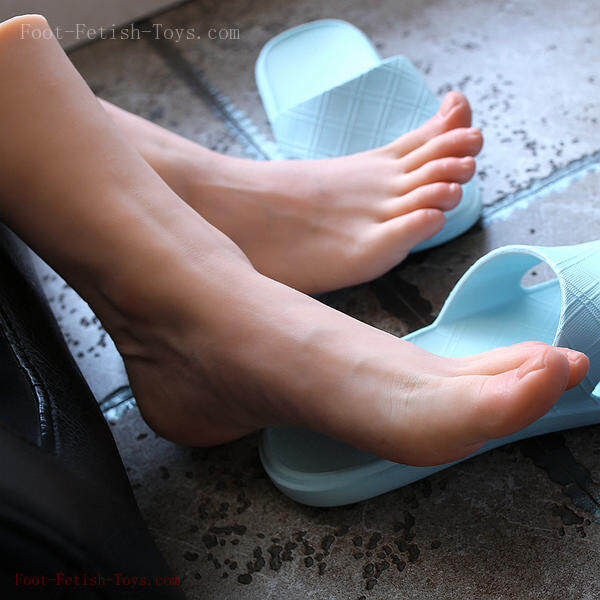
FFT has been refining this manufacturing process since 2005, and that accumulated experience shows in the consistency and detail of their output. When a company has produced over 120 distinct mold designs across nearly two decades, it develops an intuitive understanding of what details customers actually notice and care about. The distribution of weight in a held foot, the firmness of the heel versus the softness of the toe pads, the crispness of the sole's texture—none of these things happen by accident in a mature product line.
Understanding this process also helps explain why premium silicone foot models are priced the way they are. A $400 platinum-silicone foot model is not expensive relative to the material costs, labor hours, and tooling investment that produced it. For buyers approaching the category for the first time, this context transforms what might seem like a high price into something that looks quite reasonable—a considered purchase, not an impulse buy. The realism you are paying for is the result of genuine expertise, and it is the kind of quality that you feel the moment you pick it up.

No comments yet~ Be the first to share your thoughts!