
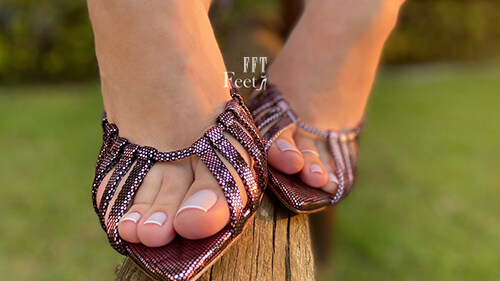
If you have ever found yourself more drawn to a pair of attractive feet than to most other physical features, you are far from alone. Foot fetishism—clinically referred to as podophilia—is consistently ranked as the most prevalent body-part-specific sexual interest in humans. Studies dating back to Alfred Kinsey's groundbreaking research, and more recent surveys published in psychology journals, estimate that anywhere from 5 to 14 percent of adults report a significant erotic interest in feet. That number climbs even higher when you include people who find feet aesthetically appealing without necessarily having a strong sexual response.
So what exactly is happening in the brain? Neuroscientist Vilayanur Ramachandran offered one of the most quoted explanations: in the somatosensory cortex of the brain, the region that processes sensory input from the feet sits directly adjacent to the region that processes input from the genitals. Cross-activation between these two areas, he argued, could explain why feet hold erotic significance for so many people. It is an appealing theory, though modern neuroscience has shown the picture is more complex. Attraction to feet is almost certainly shaped by a blend of neurological wiring, early sensory experiences, and learned associations that develop over time.
Culturally, feet have carried an enormous symbolic weight across history. In ancient China, bound feet were considered the ultimate marker of feminine beauty and refinement. Victorian-era literature is peppered with barely concealed foot imagery. The shoe as a surrogate for the foot appears in folk tales from Cinderella to countless others worldwide. None of this is coincidental. Feet represent both vulnerability and power simultaneously—they carry us through the world, they connect us to the ground, and they are one of the most intimate parts of the body that still remains clothed in most public settings. That combination of the hidden and the sensory creates a strong psychological draw.
It is worth being clear: foot fetishism is not classified as a disorder unless it causes distress to the individual or is pursued without consent. The American Psychiatric Association distinguishes between a fetish as a preference and a fetishistic disorder that impairs functioning or harms others. For the vast majority of people who are drawn to feet, this is simply a harmless aspect of their sexuality that enriches their inner life rather than complicating it.
The market for foot fetish toys has grown substantially over the past decade, which reflects a broader cultural shift toward acknowledging diverse forms of attraction without shame. Realistic silicone foot models in particular have become popular precisely because they allow individuals to engage with their interest privately, safely, and on their own terms. A high-quality foot fetish pro model replicates not just the visual appearance of attractive feet but also their tactile qualities—the soft give of the arch, the defined contours of the toes, the subtle texture of the skin.
From a psychological standpoint, engaging with fetish objects in a healthy, consensual context is widely regarded by therapists as a legitimate form of sexual expression. Many people find that having access to a physical object that corresponds to their attraction reduces anxiety, supports self-acceptance, and even improves their overall relationship with their own sexuality. Rather than being something shameful, a well-crafted silicone foot model can serve as a tangible affirmation that a person's desires are real, valid, and worth honoring.
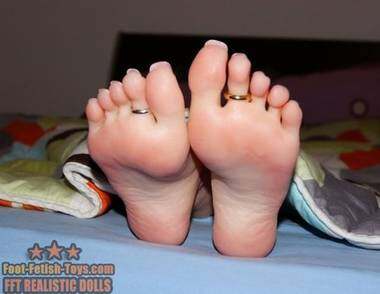
It is also worth noting the social dimension. Online communities dedicated to foot appreciation have millions of members globally. Reddit forums, Discord servers, and dedicated websites connect people who share this interest, allowing them to discuss aesthetics, share art, and find community. This normalization has in turn driven demand for products that meet enthusiasts where they are—not with stigma, but with craftsmanship. Companies like FFT, which has been manufacturing realistic silicone models since 2005, exist precisely because the demand from this community is genuine, substantial, and deserving of quality.
Understanding foot fetishism is ultimately an exercise in understanding human desire more broadly. We are wired to find beauty in unexpected places, to attach meaning and sensation to parts of the body that culture teaches us to overlook. The foot, with its delicate architecture and its dual role as tool and symbol, turns out to be a remarkably rich site of human fascination. Whether you are someone who shares this interest or simply someone curious about why it is so common, the honest answer is the same: the human capacity for attraction is wider, stranger, and more interesting than any simple account could capture.

No comments yet~ Be the first to share your thoughts!